Third-Party AI Governance: Fintech's Next Must-Have
Third-Party AI Governance is becoming a must-have fintech control. Learn what regulators expect, what to review, and how to build it before launch.

Introduction
Third-Party AI Governance is no longer optional for fintechs.
Vendors already touch pricing, fraud, support, underwriting, and marketing. Regulators know it. If your team still treats AI tools like ordinary software purchases, you are already behind.
This guide explains why the shift is happening, what the control should cover, how to build it inside a fintech team, and where most companies get it wrong.
Why Third-Party AI Governance Is Coming Next
Regulators Are Targeting The Gaps
Regulators do not care much whether a vendor calls something “AI.” They care about consumer harm, weak oversight, and decisions that cannot be explained when something goes wrong.
That is why the CFPB, FTC, state AGs, and bank regulators all matter here. The CFPB’s AI posture and advanced technology oversight make it clear that automated decisioning is on the radar. The FTC keeps pressure on privacy, deception, and unfair practices. Public guidance like the CFPB’s materials on advanced technology oversight and AI-driven credit decisions shows how fast these issues can turn into exam questions.
That is the point. Fintechs cannot hide behind a vendor contract when disclosures, bias, or customer outcomes break down.
Vendor Risk Is Becoming Model Risk
Traditional vendor reviews were built for outsourcing, not for model behavior. A SOC report and a few contract clauses help, but they do not tell you how the system makes decisions, what data shaped it, or how fast it changes.
That is where model risk management comes in. The more a third party influences approvals, fraud flags, recommendations, or adverse actions, the more vendor risk starts to look like model risk. Fintechs need AI overlays on top of existing payments, lending, fraud, and marketing controls.
The issue is not just the tool. It is the decision path.
Business Pressure Will Force The Shift
Boards and exec teams want controls they can repeat. They do not want a fresh legal scramble every time a model changes or a customer complains.
That pressure gets stronger as bank partners, sponsor banks, auditors, and exam teams ask for proof. A clean process helps product launch faster because the team knows who reviews what, when, and why. It also cuts rework, which matters when releases are tied to quarterly targets and tight budget cycles.
That is why early adoption wins. If governance is built before the next release, it becomes part of the operating rhythm. If it is added after something breaks, it feels like damage control.
What A Defensible Control Includes
Inventory Every Third-Party Use Case
Start with the basics: map every vendor, workflow, and embedded model that touches customer data, pricing, approval logic, fraud, support, or marketing. Do not limit the list to products that market themselves as AI.
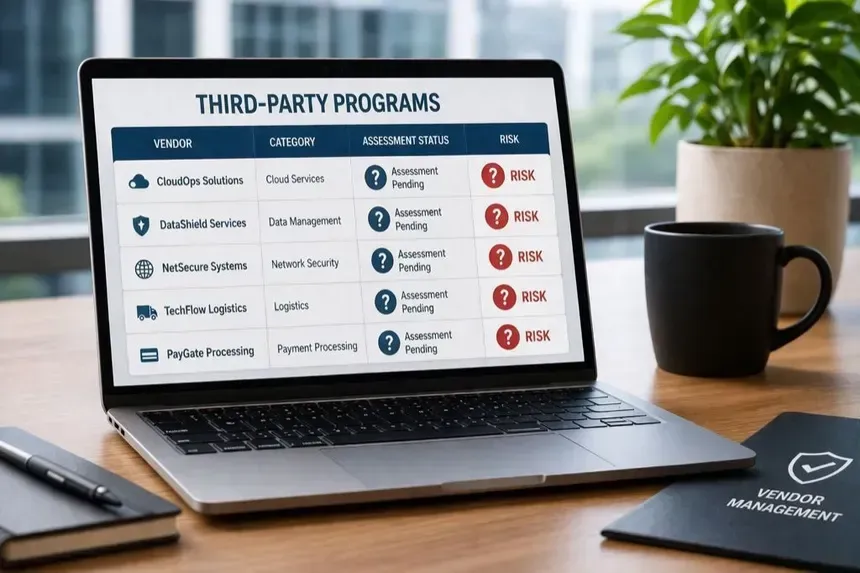
A loan decision tool, a support chatbot, a fraud engine, or a marketing optimizer can all create risk. The inventory should capture the owner, use case, data types, decision impact, and contract status in one place.
Keep the tracker simple. If people cannot update it in five minutes, they will not use it.
Review Risk Before The Contract Signs
This is where many fintechs lose control. Once the contract is signed, the vendor has leverage.
At minimum, ask about training data, output limitations, bias checks, sub-processors, model change notifications, and human override rules. Also ask what happens when the model drifts or the vendor updates the system without warning.
Legal, product, security, and compliance should review together before procurement closes the loop. The review should line up with NIST’s AI risk guidance, NIST’s AI Risk Management Framework, FTC privacy and confidentiality guidance, and the broader posture in the CFPB’s AI hub.
If the vendor cannot explain its controls in plain English, that is a signal.
Define Oversight After Go-Live
A real Third-Party AI Governance control does not stop at launch. It keeps going after the system is live.
That means monitoring outputs, reviewing exceptions, escalating issues, and re-approving the tool when the risk changes. It also means keeping logs of human review, testing outcomes, incident notes, and remediation steps.
That evidence matters. Examiner expectations and examiner-grade third-party oversight are both built around proof, not promises. If a sponsor bank or auditor asks how you know the tool is still behaving, you need a clean answer.
How To Build The Control
Step 1. Set Ownership And Scope
Pick one owner for Third-Party AI Governance. That person does not need to do every review, but they do need authority over the process.
This should not live only with legal, only with engineering, or only with procurement. Legal knows the risk.
Product knows the use case. Engineering knows the integration. Procurement knows the vendor path. You need all four to move in sync.
Define who approves launch, who can escalate risk, and who can shut down or offboard a vendor if the control fails. Without clear decision rights, the process turns into email threads and delay.
That is how release cycles get stuck.
Step 2. Create A Risk Triage Workflow
Build a simple intake flow that treats low-risk tools differently from customer-facing or decision-making systems. A note-taking assistant should not go through the same review as a tool used in underwriting or fraud screening.
Score each vendor on four things:
- Data sensitivity
- Consumer impact
- Regulatory exposure
- Change frequency
Then route the work through the systems your team already uses. Jira, Slack, Notion, and procurement forms are enough if the process is clear. The goal is not another system. The goal is to make review feel like part of normal work.
A good triage process saves time because it keeps the small stuff small and gives high-risk tools the attention they deserve.
Step 3. Build The Evidence File
Every vendor should have a file that shows what was reviewed and why the decision was made. That file should include due diligence notes, redlines, testing results, approvals, monitoring outcomes, and any remediation work.
Think of it as the story of the control. If something goes wrong later, that file should show who looked at the risk, what they saw, and what happened next.
It also helps with board updates and incident response. If you need senior help turning that into a real operating process, Fractional CCO Services can help fintech teams build vendor risk reviews, model oversight, and audit readiness without adding a full-time compliance executive. For a small or growing team, that can be the difference between a policy on paper and a process people actually use.
Common Gaps That Break The Control
Relying On Vendor Marketing
A polished sales deck is not proof. Words like “AI-ready,” “compliant,” and “enterprise-grade” should make you cautious, not comfortable.
Ask for documentation, sample outputs, and change logs. Ask how the vendor tests the model and what happens when performance shifts. If the answers stay vague, do not treat the tool like a low-risk purchase.
Treating AI Like One Review
AI tools change. Data changes. Vendors change their models, too.
That is why annual review cycles are too slow for many fintech release schedules. A tool that looked fine in Q1 can create a different risk profile by Q3. Third-Party AI Governance has to work like a living control, not a once-a-year checkbox.
Forgetting The Regulator Story
Some teams build controls that make internal sense but do not tell a clear story to examiners. That is a problem.
You need a direct line from the control to consumer protection, fairness, privacy, security, and vendor management. If the evidence file can explain that story, the control will feel much stronger in an exam or review. State AG guidance is a good reminder that regulators often look at the same facts through different lenses.
Conclusion
Third-Party AI Governance is becoming a standard fintech control, not a niche policy exercise.
The teams that get ahead of it will face fewer surprises, cleaner audits, better vendor decisions, and less launch friction. The smart move is simple: start with a vendor inventory, then build a basic approval and monitoring workflow before the next release.
FAQs
Q: What counts as third-party AI governance?
A: It is the set of controls a fintech uses to review, monitor, and document external AI tools or embedded models. That includes intake, due diligence, oversight after launch, and evidence retention. In plain terms, it helps you know what the vendor is doing and how to prove it.
Q: Does every fintech vendor need AI review?
A: No. A low-risk internal tool may only need a basic vendor check. But if the tool is customer-facing, influences decisions, or uses sensitive data, it needs deeper review.
Q: Which regulators care most about this issue?
A: The CFPB, FTC, OCC, Federal Reserve, state regulators, and banking partners all matter here. Expectations can show up in exams, guidance, enforcement, or contract reviews.
Q: How is this different from standard vendor risk management?
A: Standard vendor risk management looks at outsourcing, security, and contracts. Third-Party AI Governance adds concerns like explainability, bias, drift, and model updates. That is where the real decision risk lives.
Q: Can a small fintech build this without a full compliance hire?
A: Yes. A small team can build a defensible process with clear ownership, a simple triage flow, and strong documentation. A fractional leader can design the system and keep it moving without a full-time hire.
Q: What evidence do auditors usually want?
A: They usually want the inventory, risk scoring, approvals, testing, monitoring, incident logs, and remediation records. They also want to see who owned the process and how issues were handled.