SOC 2 for AI Systems: A Practical Readiness Guide
SOC 2 for AI Systems gets harder when machine learning enters the stack. Learn how to handle evidence, model drift, access control, and auditor review.

Introduction
SOC 2 for AI Systems gets messy fast. Machine learning can change after launch, even when the code stays the same. That creates real issues around evidence, access, and ongoing monitoring.
If your product uses AI features, launch-day testing is not the finish line. In this guide, you will see what changes, how auditors think, and how to build a simple readiness approach that fits a growing fintech team.
What Changes With AI Products?
Evidence gets harder to prove
In a standard app, an auditor can trace a change through code, tickets, approvals, and logs. In an AI system, that trail gets messy fast because outputs may depend on prompts, model versions, training data, and human review.
“We checked it internally” is not enough. Auditors want dated proof, clear owners, and a record of what changed. Version history, approval logs, and prompt records often matter more than teams expect.
If your product uses generative AI, it also helps to think about LLM security risks early. Prompt injection, data leakage, and unsafe outputs can all weaken your evidence story.
Model drift changes the target
Rules-based systems usually stay stable until someone edits the rule. Machine learning is different. A model can drift because users change, data shifts, or the market moves around it. That is why SOC 2 for AI Systems is not just about launch-day validation. Auditors care whether you keep checking the model after it goes live.
A good result in March does not prove the same model still behaves well in June. If you want a practical lens on ongoing monitoring, Amazon’s model monitoring in production is a helpful example. Google’s continuous model monitoring shows the same idea from another angle.
Access control gets more complex
AI systems usually touch more tools than teams first realize. You may have training data, prompt stores, deployment pipelines, admin consoles, and vendor APIs all in play.
That means role-based access has to cover more than the app itself. It should include datasets, model configs, prompts, and admin tools. Vendor and contractor access should also be part of the review, not an afterthought.
For a stronger security baseline, secure-by-design practices are worth pulling into your access review process. They help keep the focus on least privilege, logging, and clear ownership.
A Simple Framework for SOC 2 AI Readiness
Step 1. Map the AI lifecycle
Start with the full path, not just the model. Map data intake, training, testing, deployment, output generation, human review, and post-launch monitoring. Then place controls at each stage. Training controls should cover data quality and approval. Deployment controls should cover change management and release sign-off. Maintenance controls should cover drift checks, incident handling, and access reviews.
Write down who owns each step.
If nobody owns model monitoring, the alert will sit there. If nobody owns prompt changes, the audit trail breaks fast. Accountability has to be visible. A practical way to shape that work is to use the NIST AI risk management framework and then turn it into operating controls with the NIST AI RMF Playbook. That keeps the process grounded in day-to-day work, not slide decks.
Step 2. Define the AI risk set
Do not treat “AI risk” as one bucket. Break it into specific issues: bias, hallucinations, unsafe outputs, drift, data leakage, and unauthorized retraining. Then turn each risk into a control objective. If a model can produce customer-facing errors, you may need human review for high-impact outputs. If unauthorized retraining is the concern, you need tighter approval around training data and pipeline access.
Tie those risks to the trust services criteria. Security, availability, processing integrity, confidentiality, and privacy all show up in AI systems, just in different ways. For teams using external models or retrieval tools, MITRE’s AI threat landscape is a smart reference. It helps you think through prompt abuse, adversarial inputs, and pipeline weaknesses without overcomplicating the process.
Step 3. Build evidence into controls
Good AI controls are not giant. They are visible, repeatable, and easy to prove. The best ones create evidence as part of normal work.
Use logs, alerts, reviews, and approvals as your proof points. Set review cadences for model drift, accuracy checks, prompt updates, and access changes. Keep the control set small enough that the team can actually run it.
If you need a security baseline for the control catalog, NIST SP 800-53 Rev. 5 is a useful cross-check for access, logging, and change management. And if your AI feature touches personal data, the NIST Privacy Framework can help you keep that part clean too.
How Auditors Look at AI Risk
Evidence and traceability
When a model decision affects a customer, auditors want a clean trail. They want to know what input was used, what version ran, what review happened, and who approved it. That means every control should point to a specific artifact, owner, and date. A policy without a version is weak. A review without a sign-off is weak. A log that cannot be tied back to the event is weak.
Versioned policies, signed approvals, and immutable logs make the audit story much easier to defend.
If you use cloud AI tools, Microsoft’s artificial intelligence overview for service assurance is a good reminder that shared responsibility does not remove your duty to document.
Access and change management
Auditors also test who can change prompts, weights, thresholds, or deployments. They want proof that access is limited, reviewed, and removed when it is no longer needed.
Emergency access is a common weak spot. Break-glass accounts should be tightly controlled and reviewed after use. If a contractor can edit prompt logic or push a model update, that should show up in your review cycle.
Change tickets should capture the model update, the rollback plan, the testing done, and the approvals received. The AICPA SOC 2 reporting guide is the right place to sanity-check how much proof you need.
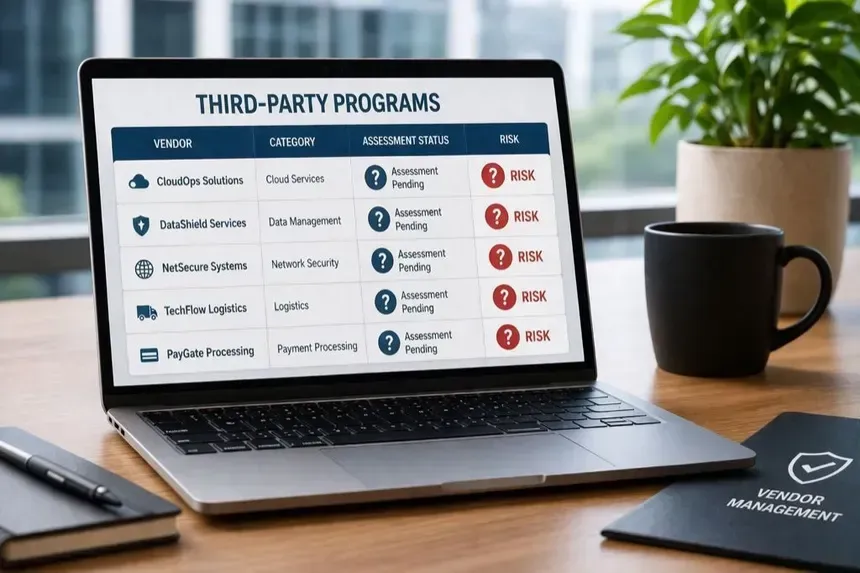
Third-party and vendor oversight
Most AI products depend on outside tools. That may include external APIs, model vendors, hosting providers, or managed platforms. Once that happens, your audit scope gets wider. Auditors will expect due diligence evidence for outsourced components. They will also want to see who owns what. If the vendor supplies the model but your team controls the use case, your team still owns the control design.
That is where regulatory expectations for AI matter. Even if the technology comes from a vendor, accountability stays with the company shipping the product.
Common Mistakes to Avoid
Treating AI like ordinary software: The biggest mistake is assuming AI is just another app with a new interface. It is not. The model can change behavior without a code release, which means you need model-specific controls, not just standard SDLC paperwork.
Collecting logs without ownership: Many teams collect logs and stop there. That does not help if nobody is assigned to review them. Evidence only matters when someone looks at it, acts on it, and keeps the control alive.
Overbuilding controls too early: Some teams go too far in the other direction. They build a heavy process nobody can maintain, then wonder why product teams ignore it. Keep the first version lean. Start with the few controls that protect the biggest risks, then add more only when the team can support them.
Relying on one-time validation: A launch test is not enough for SOC 2 for AI Systems. Auditors care much more about continuous monitoring because that shows the control still works after the model sees real users and real data.
Conclusion
SOC 2 for AI Systems is really about control after launch. If you map the lifecycle, define the highest risks, and keep monitoring honest, the audit path gets much clearer.
Start with the controls that can fail first. Then tighten the rest as the product grows.
FAQs
Q: Does SOC 2 require special AI controls?
A: Not formally. SOC 2 does not require AI-only controls, but AI systems usually need stronger evidence, tighter access, and more active monitoring than traditional software.
Q: What evidence do auditors ask for first?
A: They usually start with access logs, approval records, change tickets, and monitoring reports. If the model affects customers, they may also ask for review records tied to the output.
Q: How often should model drift be reviewed?
A: Use a risk-based cadence. High-impact models should be checked more often than low-risk internal tools, especially if the data changes quickly or the customer impact is high.
Q: Can a startup pass SOC 2 with a small AI team?
A: Yes. Small teams can pass if ownership is clear, documentation is disciplined, and the control set stays small enough to run consistently.
Q: What if the model comes from a vendor?
A: The responsibility still lands on the company using the system. The vendor may supply the model, but your team still has to govern the use case, access, and evidence.
Q: Which trust criteria matter most for AI?
A: Security, availability, and processing integrity are usually the biggest focus areas. Confidentiality and privacy also matter when prompts, outputs, or training data involve sensitive information.