Intellectual Property Risk: A 3-Step Checklist for Fintechs
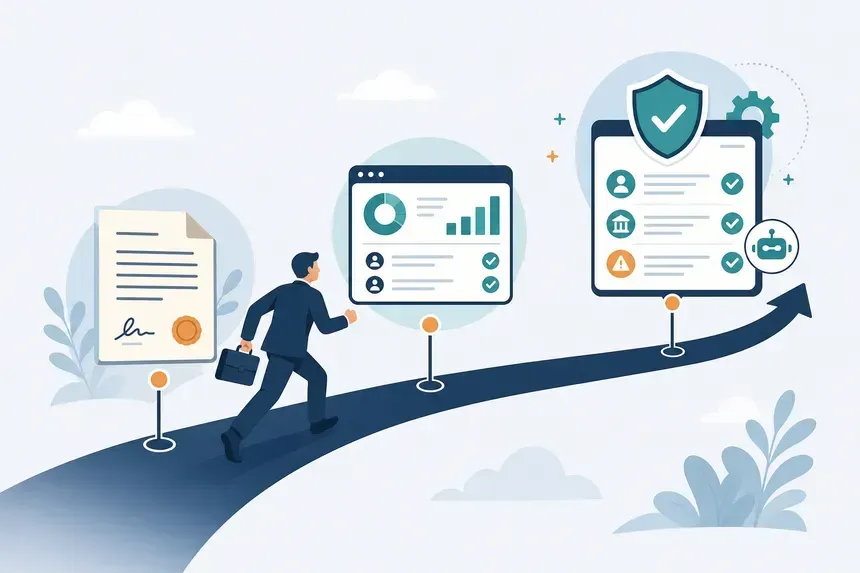
Learn how to identify assets, score licenses, and add one IP checkpoint to your sprint. This guide on Intellectual Property Risk gives fintech teams a practical 3-step framework.

Introduction
IP risk derails launches.
Intellectual Property Risk is a common blind spot for fintechs shipping fast. Left unchecked, IP problems cause license violations, leaked trade secrets, regulator questions, and paused releases.
In this guide you'll get a practical 3-step IP checklist to identify assets, score license obligations, and put simple mitigations into your release process. Follow these steps and add one IP checkpoint to your next sprint.
Why IP Risks Matter for Fintech Teams
Fintech products bundle proprietary code, open-source libraries, third-party SDKs, and datasets. That mix creates legal obligations and surprise exposures.
Regulators and counterparties expect accurate ownership and defensible controls. Failures trigger enforcement reviews or contractual claims that distract leadership and waste engineering time.
IP conflicts also slow velocity. Engineers pause sprints while counsel untangles license terms or vendor obligations. The real cost is legal fees plus lost revenue and delayed launches: a six-figure ballpark for many mid-stage fintechs.
Open-source and vendor code carry hidden requirements. Some licenses force source disclosure. SDK terms can mandate data sharing. For a clear primer on license types, read the Open Source Initiative FAQ. For litigation data, consult the USPTO datasets.
Treat IP like product risk. If you don’t, you’ll discover it at the worst possible time.
Step 1: Identify Assets and Ownership
Start with a short inventory. List your product code, third-party libraries and SDKs, algorithms, data models, scripts, and user docs. Map legal ownership. Note who authored each asset and whether contributors signed assignment or CLA agreements.
Think of an SBOM like an ingredients list for your product; you want to know what's inside before you ship.
Export a Software Bill of Materials (SBOM) from your repo. Use SPDX license list in the SBOM to capture license data.
Run automated dependency scans to collect signals. We often start with an OSS health check using the OpenSSF Scorecard and provenance checks on Software Heritage.
Quick audit checklist (run before release):
- Export dependency list and SBOM (SPDX or CycloneDX).
- Record license identifiers and any closed-source binaries.
- Confirm contributor agreements and employee assignment docs.
- Flag any vendor SDKs with unknown provenance.
Generate an SBOM in CycloneDX format when possible. Resources and tooling are listed at CycloneDX.
If an asset looks suspicious, mark it and investigate immediately. Don’t let unknown code slip through a PR.
Short checks would have stopped the release pause.
Step 2: Assess License and Contract Obligations
Scan every dependency for license type and obligations. Separate permissive licenses from viral copyleft ones.
Use a simple traffic-light rubric:
- Red — viral copyleft or vendor assignment: block release until resolved.
- Yellow — attribution or weak copyleft: mitigate or isolate.
- Green — permissive with no distribution obligations: proceed with notice.
Reference SPDX identifiers for clarity. For license basics, use the Open Source Initiative guidance. When vendor terms matter, check sample IP indemnity clauses at LawInsider.
Watch vendor SDKs for data-sharing, telemetry, or assignment clauses. Those terms can change your regulatory posture or violate privacy agreements.
If license interpretation is unclear, escalate to counsel. Tie your red/yellow/green score to a release gate so decisions happen early, not at the last minute.
Keep this simple: if you're unsure, treat a dependency as yellow until someone reviews the license text. That small rule avoids false confidence.
Step 3: Mitigate, Document, and Monitor
If you hit red, pick a mitigation: replace the library, isolate the module behind an internal API, obtain a commercial license, or negotiate vendor indemnities.
Document the decision and store it with the SBOM and release notes. Add a one-line record: who approved, why, and what follow-up is required.
Automate monitoring. Feed SBOMs into tools like OWASP Dependency-Track to watch for license changes or new vulnerabilities. Integrate license scanning into CI using OSV-Scanner or use GitHub dependency graph features.
A Fractional CCO can own these checkpoints, maintain the inventory, and negotiate vendor terms on demand.
Common Sources of IP Risk and How to Spot Them
Here are the places that cause the most trouble and exact checks you can run.
Third-party libraries and SDKs
Unvetted SDKs often bring transitive dependencies and hidden obligations. Verify provenance by checking commit history and release cadence. Use Software Heritage and the OpenSSF Scorecard to confirm maintenance activity.
Require vendor attestations for data handling and license compliance. If a vendor can’t provide clear answers, treat it as a red item.
Open-source license complexity
Understand the practical difference between permissive (MIT, Apache 2.0) and copyleft (GPL, AGPL). Copyleft can force source distribution in some deployment models.
Maintain a centralized OSS inventory with SPDX IDs. Export SBOMs in CycloneDX or SPDX and store them with release artifacts. Find tooling at CycloneDX tool center.
Vendor contracts and M&A risk
Vendors get acquired. Their licensing posture can change. Negotiate IP indemnities, source escrow, and termination rights up front. Schedule a contract refresh whenever a vendor relationship becomes strategic or before a major launch.
How to Put IP Reviews into your Release Lifecycle
Make IP hygiene a habit, not a crisis.
Add an IP gate to releases
Add an "IP gate" to your sprint release checklist. Assign clear owners: product creates the ticket, engineering runs the scan, and the Fractional CCO or legal signs off.
Set SLAs: low-risk items get a 48-hour triage; high-risk items get a 5-business-day review. For speed, triage rules should allow safe changes to proceed and block only red items. Automate scans in CI.
Build a short IP playbook
Write a one-page playbook for common scenarios: new SDK, vendor switch, or acquisition integration.
Include:
- Quick triage steps.
- Contact list for legal and external counsel.
- Decision matrix for red/yellow/green outcomes.
Assign a rotating engineer to update the OSS inventory and produce a monthly exposure note.
Train teams and measure results
Run 30–60 minute sessions for engineers and PMs on license basics. Use the Linux Foundation primer as an internal reference.
Track simple KPIs: time-to-triage, percent of releases with IP signoff, and exposure score. After any incident, run a short postmortem and update the playbook.
Automate enforcement when possible. Tools like Snyk’s SBOM guidance and FOSSA help enforce license policy at scale.
Preventative Micro Case and Product Note
A fintech shipped an analytics SDK without a dependency audit. The SDK included a copyleft submodule and telemetry that exposed internal scoring signals. The release paused. Engineering ran a forensic review and legal negotiated a remediation plan that cost time and money.
If a Fractional CCO had been embedded, they would have required an SBOM, flagged the copyleft module via SPDX IDs, and either negotiated a license or replaced the SDK before shipping. A single IP checkpoint in your sprint would have prevented the pause.
Quick action:
- Run an automated dependency scan on your main branch.
- Export an SBOM in SPDX or CycloneDX.
- Add one IP gate to your next release checklist.
Do it now.
Conclusion — Final Steps
IP risk is product risk. Identify assets, score licenses and contracts, and add a simple mitigation-and-monitor loop. Add one IP checkpoint to your next sprint. That small change reduces the chance of a release pause and cuts costly legal friction.
FAQs
Q:
What counts as intellectual property risk for fintech products?
A:
Software code, algorithms, data models, third-party SDKs, and contributor agreements.
Q: When should we involve legal versus a Fractional CCO?
A: Escalate legal for red items. Use a Fractional CCO to operationalize triage, negotiate vendors, and run regulator-ready responses.
Q: How do open-source licenses affect distribution?
A:
Permissive licenses are usually fine for distribution. Copyleft may require source disclosure depending on how you deploy or redistribute code.
Q:
What tools quickly scan dependencies for license risk?
A: OSV-Scanner, OWASP Dependency-Check, Snyk, and GitHub dependency graph are practical starting points.
Q: How to negotiate vendor IP indemnities effectively?
A:
Ask for IP warranties, indemnity caps, and source escrow.
Q: What immediate steps after finding a license violation?
A:
Stop distribution, capture SBOM and commit history, notify legal, and begin mitigation (replace, isolate, or license).