Consumer Compliance Midyear Reset: 30-Day Guide for Fintechs
Use this Consumer Compliance midyear guide to run a 30-day RESET: review policies, remediate top risks, collect indexed evidence, and run a one-day mock exam.

Introduction
Compliance drift kills launches.
It also invites exam findings.
This guide presents the RESET approach and an actionable checklist you can finish before your next exam.
Read on for a 30‑day sprint plan and practical next steps, including how a fractional CCO can run the reset and own remediations.
If you’re the COO or head of compliance at a fintech, this is written for you.
Why Regulators Prioritize Fintech Features in 2026
Regulators focus on consumer‑facing fintech features because new product models introduce fresh consumer risks.
The CFPB’s supervisory highlights and semi‑annual reports show repeated issues: disclosure errors, vendor control failures, and weak customer due‑diligence.
Startups commonly surface the same midyear gaps: outdated disclosures, missing SOC reports, patchy AML checks, and weak evidence mapping. Even a small finding can cause month‑long delays, refund obligations, and extra legal expense.
Patchwork legal advice produces inconsistent controls and repeat rework. Integrated program design ties policies, evidence, and testing to product cycles so examiners can trace decisions quickly. For third‑party and IT exam expectations, review FFIEC resources and the OCC third‑party guidance.
A quick example: a payments product launched with an old fee disclosure. The finding paused the launch until legal rewrote copy and the product team supplied timestamped screenshots. Two months lost revenue. One missed detail.
The RESET approach — Review, Remediate, Evidence, Sustain, Test
RESET is a compact operational approach to move you from reactive fixes to exam‑ready controls.
- Review: Inventory policies, vendor contracts, disclosures, training logs, and prior exam responses.
- Remediate: Fix items that reduce consumer harm and unblock launches first.
- Evidence: Build an indexed binder that links controls to sample artifacts.
- Sustain: Embed controls into sprints and release checklists.
- Test: Schedule monitoring and sample testing on a regular cadence.
Do the review first. Then produce evidence.
Example: Review a customer flow, identify a missing disclosure, patch the copy, and capture the screenshot with a timestamp. That loop covers Review, Remediate, and Evidence. For privacy and control libraries, reference the NIST Privacy Framework. For exam mapping templates, see the CFPB Guidance hub.
Track progress with three metrics: time‑to‑remediate, number of open findings, and percentage of artifacts indexed. These metrics matter because they turn opinions into reproducible evidence.
Midyear Consumer Compliance Checklist
Each checklist item maps to RESET and explains what “exam‑ready” looks like: indexed artifacts, named owners, and documented testing.
1) Centralize documentation and evidence
Inventory and centralize policies, procedures, prior exam responses, and remediation tickets. Capture version history, sign‑off logs, and training rosters.
Action: Index every artifact into a shared drive with a clear naming convention. Use CFPB sample requests as your mapping guide.
Why this matters: Examiners want to reproduce your answers quickly. A messy drive slows you down and raises red flags.
2) Audit disclosures and UX touchpoints
Test every consumer touchpoint, web, mobile, emails, and in‑app modals, for accurate, timely disclosures. Capture screenshots and the code or document reference where the disclosure lives.
Action: Run a rapid UX sweep and assign fixes into your sprint board.
Use
plain language guidance when editing copy.
Mini example: A modal showed legacy fee language. Product fixed the copy, compliance captured a screenshot, and the release proceeded after the evidence was attached to the Jira ticket.
3) Run a 50‑state licensing gap analysis
For lending and payments, confirm which states require licenses or notice filings. Identify at‑risk states and upcoming renewals.
Action: Compile current license copies and renewal dates. Start with the NMLS State Resource Center.
Tip: Track renewal deadlines as calendar events and assign an owner for each state. Missing one renewal creates manual work and examiner questions.
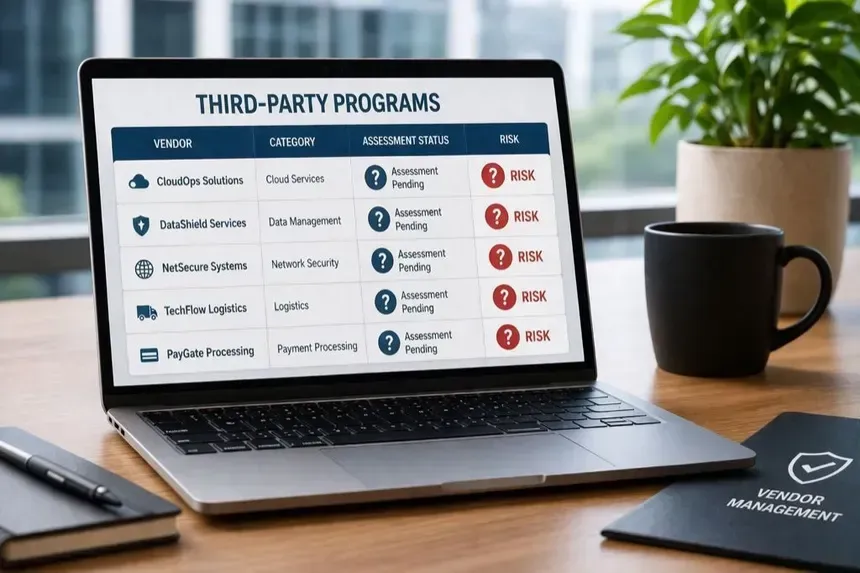
4) Inventory vendors and third‑party risk
List vendors that touch consumer data, payments, decisioning, or communications. Confirm contracts include SLAs, audit rights, and breach notification terms.
Action: Request SOC reports and log remediation items. Use FFIEC and OCC materials for vendor basics. AICPA explains SOC differences.
Example: A vendor’s SOC report showed a control gap. The remediation ticket included the vendor’s remediation plan, dates, and a follow‑up SOC evidence upload. That closed the finding.
5) Prioritize monitoring and testing
Focus testing on high‑risk products and controls. Define sample sizes and testing steps. Document the methodology so an examiner can reproduce it.
Action: Schedule quarterly sampling for high‑risk product lines. Use NIST and OCIE testing guidance to shape methods.
Why document methodology: If an examiner asks "how did you test X?" you should be able to hand them the script, sample size, and results.
6) Compile complaint handling and remediation proof
Pull complaint logs and timeliness metrics. Produce root‑cause analyses and map themes to product fixes.
Create corrective‑action tickets in Jira and tie them to resolution artifacts.
Action: Add complaint trend dashboards to your exam binder.
Real outcome: Showing a trend‑based remediation (dashboard → ticket → fix → evidence) tells examiners you’re closing issues, not just logging them.
7) Update staff training and role attestations
Issue role‑based training for Product, Engineering, and Support. Capture attendance, quiz results, and signed attestations.
Action: Publish a short attestation and collect signatures. Keep training artifacts versioned in your central evidence store.
Quick note: Short role‑based modules with a one‑page attestation are easier to maintain and review than hour‑long generic sessions.
8) Run a one‑day mock exam and binder
Run a 1‑day mock exam focused on the top three risks: disclosures, licensing, and vendor management.
Produce an indexed exam binder with links and a short issues tracker.
Action: Complete mock exam and score readiness. Use CFPB exam prep resources for checklist templates.
Mock exams force evidence collection and demonstrate who owns each item.
How to Execute the RESET in 30 days
Organize work into a four‑week sprint with clear weekly goals.
Week 1 — Assessment (Review):
Run the Review. Inventory docs, vendors, licenses, and past exam items. Produce a top‑5 risk list and assign owners.
Week 2 — Fix top 5 items (Remediate):
Patch disclosures, request SOC reports, file urgent licensing items, and update vulnerable contracts.
Week 3 — Evidence collection (Evidence):
Index artifacts, capture screenshots, finalize training rosters, and populate the exam binder.
Week 4 — Mock exam & handoff (Sustain/Test):
Run the 1‑day mock, score readiness, and deliver an issues tracker with owners and due dates.
Convert findings into Jira tickets and prioritize by consumer harm and launch impact.
Meeting rhythm: 3–5 hour weekly stakeholder syncs and short daily check‑ins during remediation weeks. Keep decisions fast—if a fix will unblock a launch, escalate it.
What you’ll have after 30 days:
- An indexed exam binder with links to artifacts.
- A scored mock exam and an issues tracker with owners and due dates.
- A prioritized remediation list for ongoing work.
Conclusion — Quick Recap and Next Step
Centralize your evidence. Name owners for each artifact.
Do that one thing this month and you remove the single biggest friction that slows launches.
Today’s practical step: index one policy and attach one screenshot that proves the policy is live. That small task moves you from theory to evidence.
FAQs
Q: What minimum evidence does an examiner expect?
A: Current policies, training logs, sample testing results, and key contracts (vendor SOCs and licenses).
Q: How often should disclosures be updated midyear?
A: Update when product features or pricing change, and run a quarterly review with version tracking and an owner.
Q: Can a fractional CCO replace general counsel?
A:
No. A fractional CCO manages operational compliance and program design. Counsel handles legal opinions and litigation. They work together.
Q: How do I prioritize remediation on a tight budget?
A: Prioritize by consumer harm, regulator focus, and product launch impact. Fix disclosure and licensing gaps first, then vendor controls and monitoring.
Q: What’s a reasonable scope for a 30‑day RESET?
A: Top 5 high‑risk items, evidence collection, and a 1‑day mock exam with a scored issues tracker.
Q: Where can I find state licensing checklists?
A: Start with NMLS and state regulator sites.